Renowned as the crown jewel of Chinese green teas, Longjing (Dragon Well) Tea stands as one of the most celebrated and historic teas in the world. Grown in the misty hills surrounding Hangzhou’s West Lake, it is prized for its signature flat shape, delicate chestnut aroma, and clean, lingering sweetness. For centuries, it has been favored by scholars, emperors, and tea lovers alike, earning its reputation as the “No. 1 Tea Under Heaven.”
Origins: A Millennium-Old Treasure from West Lake
Longjing Tea’s history stretches back over 1,000 years, with records dating to the Tang Dynasty. By the Song Dynasty, it was already highly regarded for its exceptional quality, and during the Qing Dynasty, the Qianlong Emperor famously designated 18 tea bushes near Longjing Temple as “Imperial Tea Trees,” cementing its status as a royal tribute tea.
The finest Longjing comes from the core production areas around West Lake: Shifeng Mountain, Longjing Village, Yunqi, Hupao, and Meijiawu. Nestled between hills and waters, these tea gardens enjoy mild temperatures, abundant rainfall, and soft, diffused sunlight year-round. The rich, acidic sandy loam soil nourishes the tea bushes, producing leaves with concentrated flavor and natural sweetness.

Harvest & Plucking: Tender Spring Buds Picked at Dawn
Longjing is celebrated for its strict plucking standards. Harvest takes place only in early spring, with the most prized batches picked before the Qingming Festival — known as Mingqian (Pre-Qingming) tea, often said to be “as valuable as gold.”
Pickers select only the tenderest buds and young leaves, typically one bud with one or two unfolding leaves. Harvesting happens at dawn, before the dew evaporates, to preserve the leaves’ freshness and aroma. Every batch is hand-plucked with extreme care, as even a single damaged leaf can affect the final quality.
Traditional Processing: Hand-Fired Craftsmanship
What makes Longjing truly unique is its traditional hand-firing process, refined over generations. Skilled artisans roast the leaves in a flat iron wok at controlled temperatures, using ten classic hand movements — shaking, folding, pressing, rolling and more — to shape the leaves into their signature flat, smooth, needle-like form.
The process has two key stages:
Raw Pan (Qing Guo): Fresh leaves are first fired to halt oxidation, locking in their vibrant green color and fresh aroma.
Finishing Pan (Hui Guo): The leaves are then slowly roasted at a lower temperature to dry them further, enhance their chestnut-like fragrance, and finalize their flat shape.
This labor-intensive craft gives Longjing its iconic appearance and layered flavor profile.
Flavor Profile: Chestnut Aroma & Clean Sweet Finish
Premium Longjing is defined by four distinct hallmarks:
Dry leaf: Flat, slender and straight, with a natural yellow-green hue and subtle sheen.
Aroma: High, clear and long-lasting, with prominent roasted chestnut and fresh bean notes.
Liquor: Pale, bright apricot-green, crystal clear.
Taste: Smooth, refreshing and umami-rich, with a gentle vegetal sweetness and a pronounced, lingering aftertaste known as hui gan (returning sweetness).
Unlike more grassy green teas, Longjing offers a warm, rounded character with no bitterness, making it exceptionally approachable.

Brewing Guide
To bring out the best in Longjing Tea:
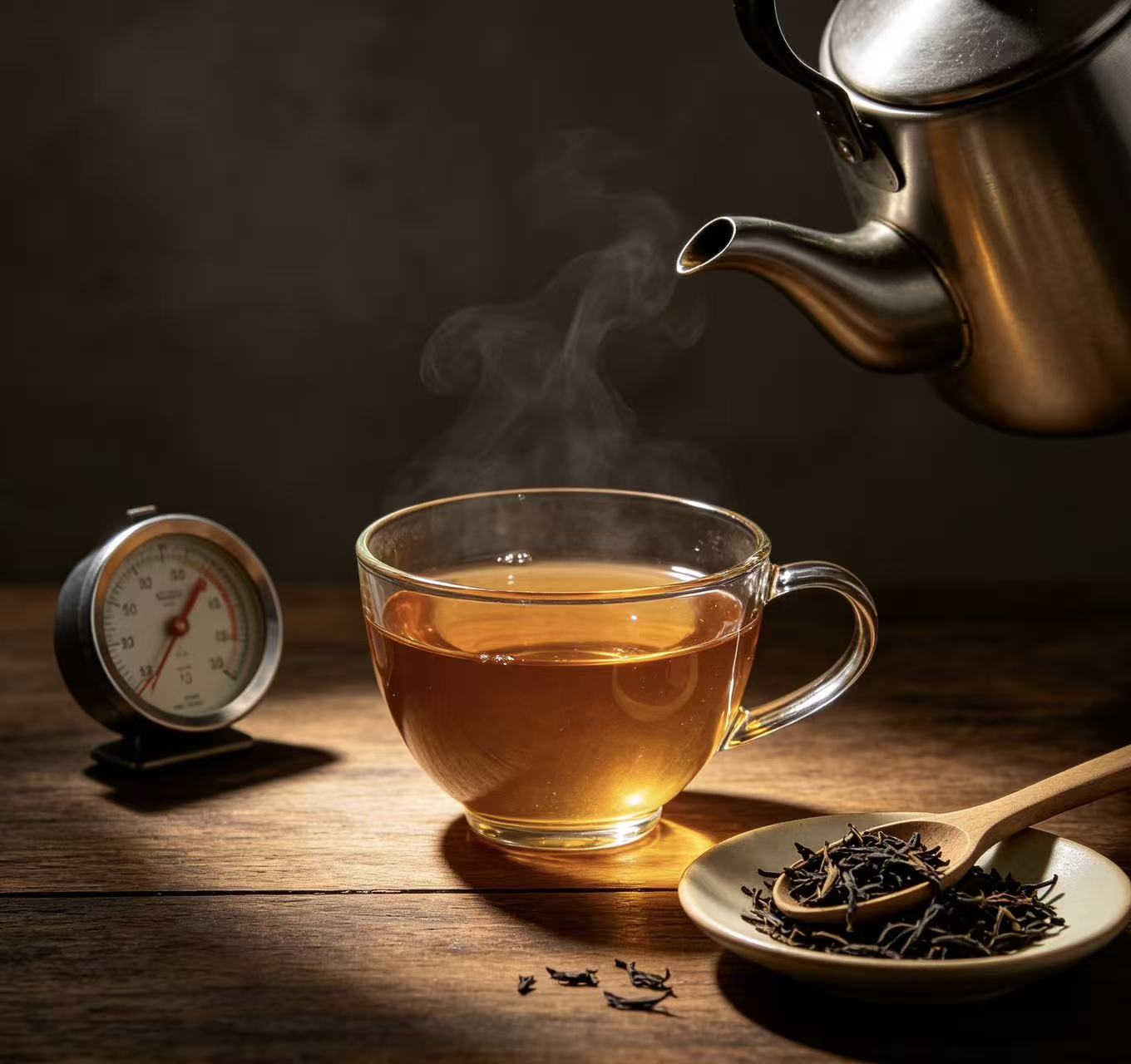
Water temperature: 80–85°C (176–185°F) — boiling water will scorch the delicate leaves and create bitterness.
Vessel: A clear glass is ideal, to admire the leaves unfurling and the pale liquor.
Method: Use the “middle pour” method: fill the glass one-third full with water, add 3g of tea, then top up with remaining water.
Steeping time: 1–2 minutes per infusion. High-quality Longjing can be steeped 3–4 times.
More than just a tea, Longjing is a symbol of Chinese tea culture and craftsmanship. Each sip carries the quiet elegance of West Lake’s landscapes and the skill of generations of artisans. Whether enjoyed on a quiet morning or shared with guests, it remains the gold standard for green tea excellence.