Meta Description: Learn the best water temperature for every type of loose leaf tea, from green tea to pu-erh. This beginner guide covers exact ranges, no-thermometer tricks, and common mistakes to avoid.
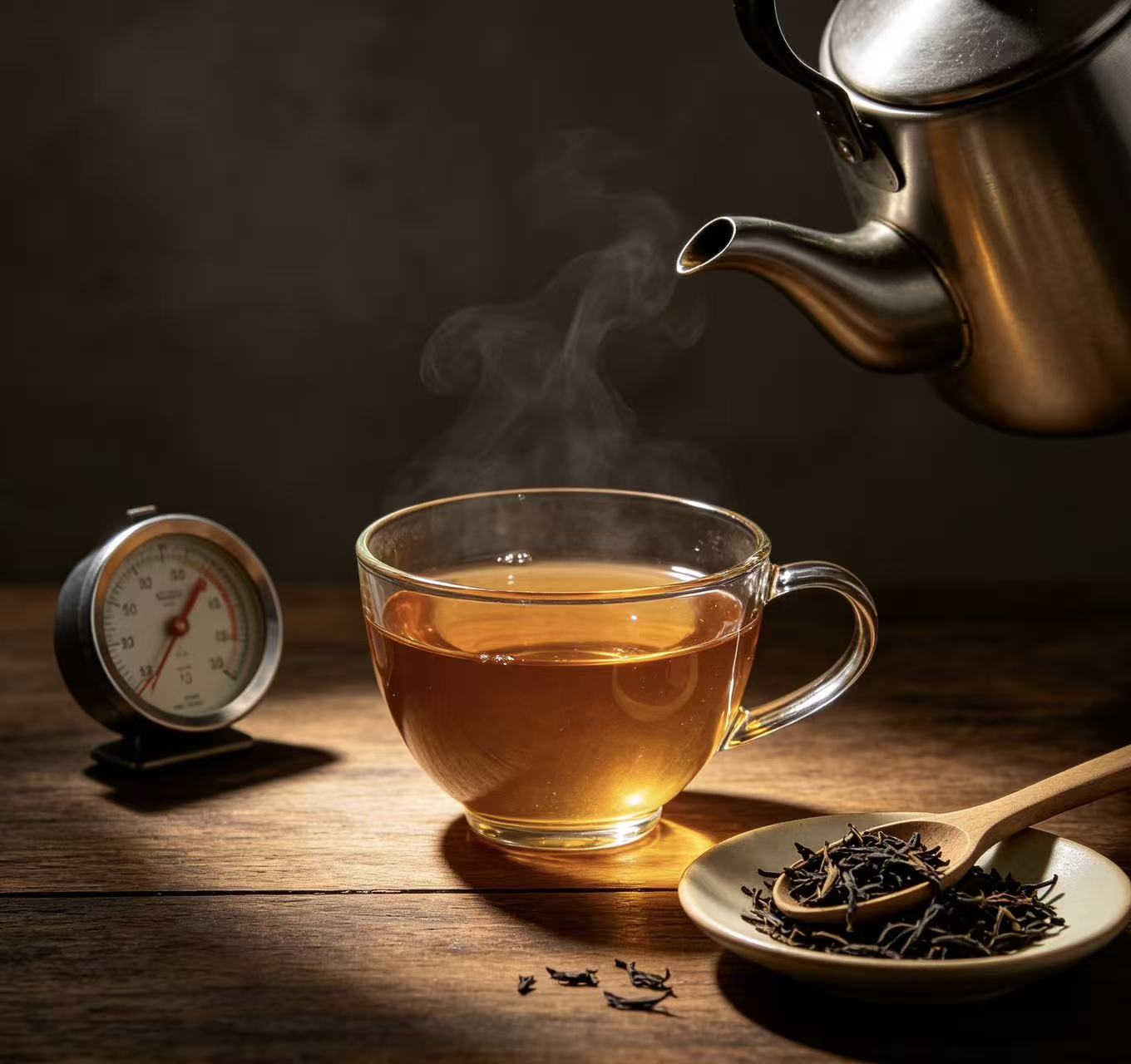
If you’re new to loose leaf tea, using the wrong water temperature is the single most common reason your brew tastes bitter, flat, or weaker than it should. Many beginners boil water and pour it straight onto every tea, then wonder why their green tea tastes harsh or their pu-erh feels thin and lifeless. The truth is, different leaves unlock their best flavors at different heat levels — and getting this one detail right will improve every cup you make. This guide breaks down the ideal brewing temperature for every major tea type, shares easy ways to estimate heat without a thermometer, and points out the most common temperature mistakes that ruin otherwise good tea.
Why Water Temperature Makes Such a Big Difference
Tea leaves contain hundreds of flavor compounds, and each one dissolves into water at a different temperature. Delicate floral and sweet notes come out at lower heats, while bitter tannins and dark roasted flavors only release fully with hotter water.
If you use water that’s too hot for a delicate tea, you’ll pull out excess bitterness and burn away the bright, fresh aromas before you even taste them. If you use water that’s too cool for a bold tea, the leaves never fully open, and you’re left with a weak, watery cup that has no depth. Getting the temperature right isn’t about being precise down to the degree — it’s about matching the heat to the leaf so you get balance, not harshness or blandness.
Best Water Temperature for Each Tea Type
These are standard ranges for each category. Within each type, younger, more tender buds and leaves lean toward the lower end, while thicker, older or more processed leaves lean toward the higher end.
- Green tea: 70–80°C (158–176°F). Fine bud teas like Longjing and Biluochun stay on the lower end to avoid burning fresh, grassy sweetness.
- White tea: 75–85°C (167–185°F). Silver needle and other bud-only whites use cooler water; shou mei and thicker leaf whites can handle slightly higher heat.
- Light oolong tea: 85–90°C (185–194°F). Floral, lightly oxidized oolongs taste best at medium heat to preserve fragrance without pulling out harshness.
- Medium & roasted oolong tea: 90–95°C (194–203°F). Roasted and heavily rolled oolongs need hotter water to unfurl and release their full roasted aroma.
- Black tea: 90–95°C (194–203°F). Fully oxidized black teas are very forgiving and release their malted sweetness well at high temperatures.
- Ripe pu-erh tea: 95–100°C (203–212°F). Compressed and aged ripe pu-erh needs near-boiling water to break open the leaves and deliver smooth, full flavor.
- Raw pu-erh tea: 90–95°C (194–203°F) for young raw pu-erh; older raw pu-erh can handle boiling water.

How to Estimate Temperature Without a Thermometer
You don’t need a fancy thermometer to brew well. With a little practice, you can estimate heat accurately using just a kettle and a timer.
After water comes to a full rolling boil, take it off the heat and leave the lid off. Let it sit for roughly one minute and it will drop to about 90–95°C, perfect for black tea and roasted oolongs. Let it sit for two to three minutes and it will cool to around 80–85°C, ideal for most white teas and light oolongs. For green teas that need even lower heat, add a small splash of cool water to boiled water, or let it rest for four to five minutes.
You don’t have to be exact. Even being within 5°C of the ideal range is enough to make a noticeable difference in how smooth and flavorful your tea tastes.

Common Temperature Mistakes That Ruin Your Tea
Boiling every tea by default
This is the number one beginner mistake. Boiling water works great for pu-erh and dark oolongs, but it will turn most green and white teas bitter and dull in just a few seconds. If you usually brew all your tea with freshly boiled water, try turning the heat down one notch for lighter teas — you’ll likely taste an immediate improvement.
Using water that’s too cool for bold teas
On the opposite end, using lukewarm water on black tea or pu-erh gives you a thin, flat cup with no body. These teas are made to handle high heat, and they need it to release their full flavor. If your black tea always tastes weak, the problem is usually not enough heat, not enough leaves, or not enough time.

Re-boiling the same water over and over
Water that has been boiled multiple times loses dissolved oxygen, and the resulting tea can taste flat and lifeless. For the best results, use fresh cold water each time you brew, and only boil what you need.
Treating all teas in one category the same
Not every green tea or every oolong is identical. A bud-heavy premium grade needs cooler water than a coarse, leafy everyday grade. When you try a new tea, start in the middle of its temperature range and adjust up or down based on how the first cup tastes.
Mastering water temperature is one of the fastest ways to go from okay tea to consistently great tea, and it doesn’t require any special equipment or years of experience. Start with the standard ranges for each tea type, use simple timing to estimate heat when you don’t have a thermometer, and tweak up or down based on what you taste. Once you match the heat to the leaf in front of you, you’ll get smoother, more aromatic cups every single time.
For more simple brewing advice, explore our full tea brewing guides collection, or shop our curated selection of beginner-friendly loose leaf teas to practice with.=