Meta Description: Wondering how much loose leaf tea to use per cup? Learn standard tea-to-water ratios for every tea type, easy ways to measure without a scale, and common mistakes to avoid for balanced brews.
If you’re new to loose leaf tea, figuring out how much loose leaf tea per cup to use is one of the first and most impactful details to get right. Use too few leaves and your brew tastes thin, watery, and bland; use too many and it turns harsh, bitter, and overwhelming before you even finish the first sip. Many beginners guess by eye and end up with inconsistent results, never sure if the tea itself is low quality or if they just used the wrong amount. The truth is, a standard measurement baseline will immediately make your brews more consistent, and you don’t need an expensive scale to get close. This guide covers standard ratios for every major tea type, simple ways to measure without tools, and how to adjust amounts to match your own taste.
Why Tea Leaf Quantity Matters So Much
Tea flavor is a balance of aromatic compounds, sweet notes, and bitter tannins, and that balance shifts dramatically with how much leaf you use relative to water. The ratio of tea to water controls how fast flavor extracts, and it directly affects whether your cup feels smooth and balanced or sharp and unbalanced.
Using the right amount also makes it much easier to troubleshoot bad brews. If you always use a consistent quantity, you’ll know right away whether a bitter cup comes from water temperature, steep time, or the tea itself. Without a baseline, you’re guessing every time, and you’ll never build a reliable feel for what good tea should taste like.
Standard Tea-to-Water Ratios by Tea Type
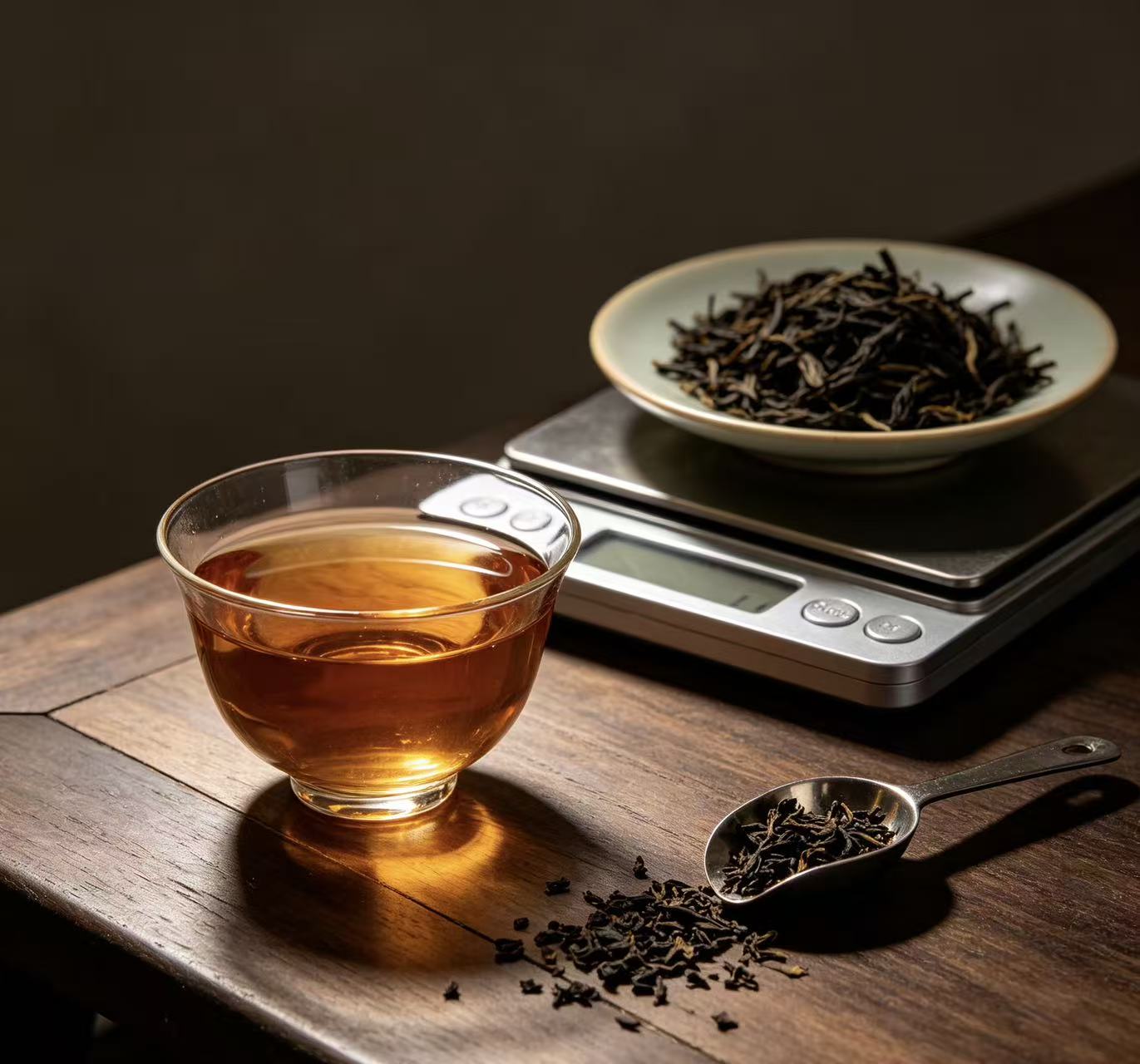
The most widely used baseline for Western-style brewing is 2–3 grams of loose leaf tea per 200–250ml (6–8 oz) of water. Within that range, different tea types lean slightly higher or lower based on leaf density and flavor intensity.
- Green tea: 2 grams per 200ml water. Green teas are tender and extract quickly, so a lighter amount prevents harsh bitterness and keeps the fresh, vegetal notes bright.
- White tea: 2–2.5 grams per 200ml water. Bud-heavy white teas are light and delicate; slightly more leaf adds body without making the brew heavy.
- Light oolong tea: 2.5 grams per 200ml water. Rolled light oolongs unfurl as they steep, and a moderate amount brings out floral aroma without astringency.
- Roasted oolong & yancha: 3 grams per 200ml water. Denser, roasted oolongs have deeper flavor and can handle a higher leaf amount for full body.
- Black tea: 2.5–3 grams per 200ml water. Fully oxidized black teas are forgiving; use 2.5g for a lighter cup and 3g for a bolder, breakfast-style brew.
- Ripe pu-erh tea: 3 grams per 200ml water. Compressed ripe pu-erh is dense and mellow, and a standard 3g amount delivers smooth, full flavor across multiple infusions.
- Raw pu-erh tea: 2.5–3 grams per 200ml water. Young raw pu-erh can be astringent, so start lighter and work your way up as you get used to the profile.

How to Measure Loose Leaf Tea Without a Scale
You don’t need a digital scale to brew good tea at home. For everyday drinking, you can estimate reasonably well using common household items and basic visual cues.
A standard teaspoon holds roughly 2–2.5 grams of average-sized whole leaf tea. For lighter, fluffier leaves like white peony or large leaf green tea, a slightly heaped teaspoon works well. For denser, rolled oolongs and compressed pu-erh, a level teaspoon is usually closer to 3 grams.
If you don’t even have a teaspoon, use the palm method. A small pinch between your thumb and index finger, roughly the size of a coin, equals about 1 gram of leaf. For a standard 200ml cup, two to three pinches will land you in the normal range. It won’t be perfectly precise, but it will be consistent enough for great daily tea.

Common Measurement Mistakes That Ruin Your Brew
Counting teaspoons for every tea the same way
Teaspoon measurements only work as a rough estimate because leaf size and density vary so much. A teaspoon of fluffy white tea weighs much less than a teaspoon of tight rolled oolong. If you use one level spoon for everything, some teas will be far too weak and others far too strong.
Using the same amount for every cup size
A 200ml teacup and a 400ml mug need very different amounts of leaf. Many beginners use one spoon for both, and then wonder why their mug of tea tastes so watery. As a general rule, double the leaf amount when you double the water volume.
Packing leaves tightly into the measuring spoon
For whole leaf teas, you want a loose, level spoonful, not a packed-down mound. Packing the leaves adds 30–50% more tea than intended, and you’ll end up with a bitter, over-extracted cup very quickly.

Quick Ways to Adjust Strength to Your Taste
The standard ratios are a starting point, not a strict rule. If you prefer lighter tea, drop the amount by about 0.5 grams per cup. If you like bold, strong brews, add 0.5–1 gram instead of steeping for much longer.
It’s almost always better to adjust leaf amount than to steep longer for more strength. Extra steep time pulls out more bitterness and astringency before it adds more pleasant flavor. More leaves, on the other hand, give you fuller taste without the harsh edge, as long as you keep your steep time the same.
Quick Answers to Common Tea Measurement Questions
Does leaf size affect how much tea I should use?
Yes. Smaller broken leaves have more surface area and extract faster, so you can use slightly less. Large whole leaves extract more slowly, so you may need a little more to reach the same strength in the same amount of time.
Do I need a digital scale to make good tea?
No. A scale is helpful for consistency and learning, but most people brew perfectly good tea with just a teaspoon and a little practice. Start with the baseline estimates and adjust from there.
How much tea should I use for a full teapot?
Calculate based on total water volume. If your teapot holds 500ml, use roughly two and a half times the amount you would use for a 200ml cup. You can also start slightly lighter and add more leaves next time if it feels too weak.
Knowing how much loose leaf tea per cup to use gives you a reliable baseline that makes every brew more consistent, and it’s one of the easiest small changes to make as a new drinker. Start with the standard ratios for each tea type, use a teaspoon or simple pinch estimate if you don’t have a scale, and tweak the amount up or down until it matches your preferred strength. Once you lock in a measurement you like, you’ll spend less time guessing and more time enjoying smooth, balanced cups every day.
For more beginner brewing advice, explore our full tea brewing guides collection, or shop our curated selection of everyday loose leaf teas to practice your measurements with.