Introduction
If you’re looking for steady focus without the harsh jitters of coffee, you’ve probably asked: does oolong tea have caffeine? The short answer is yes — but as a semi-oxidized tea between green and black tea, its caffeine falls into a gentle, highly adjustable middle ground.
On average, an 8-oz (240ml) cup of brewed oolong contains 30–50 mg of caffeine, paired with natural L-theanine that slows absorption for calm, sustained alertness. Below we break down exact caffeine ranges by tea style, compare it to common drinks, and share simple ways to tailor caffeine levels to your tolerance.

How Much Caffeine Is in Oolong Tea?
There is no single fixed number, because caffeine content shifts with oxidation, leaf grade, and brewing method. Most standard loose-leaf oolongs fall into a predictable range per 8-oz cup.
Typical caffeine levels:
Light, lightly oxidized oolongs (Tieguanyin, Alishan): 25–40 mg
Medium roasted oolongs: 35–50 mg
Dark, heavily roasted oolongs (Da Hong Pao, Rougui): 40–60 mg
Oolong tea bags: 40–65 mg
Key Factors That Change Caffeine Levels
Oxidation:
Higher oxidation speeds up caffeine extraction. Dark roasted oolongs release more caffeine than light floral styles.
Leaf grade:
Young buds and top leaves carry more caffeine than mature lower leaves.
Steeping time:
A 1-minute steep delivers far less caffeine than a 5-minute steep.
Water temperature:
Hotter water pulls caffeine out faster.
Leaf format:
Broken leaves in tea bags release caffeine much faster than whole loose leaves.
Oolong Tea Caffeine vs. Coffee & Other Drinks
All values below are for a standard 8-oz (240ml) serving, to help you put oolong’s caffeine level in context.
| Drink | Caffeine Content (per 8oz) |
| Brewed drip coffee | 80–100 mg |
| Black tea | 40–70 mg |
| Oolong tea | 30–50 mg |
| Green tea | 20–45 mg |
| White tea | 15–30 mg |
| Matcha (1 tsp powder) | 70–90 mg |
Oolong tea has roughly half the caffeine of a typical cup of coffee, making it a popular afternoon option when full coffee would risk disrupting sleep.
Why Oolong Tea Feels Gentler Than Coffee
Many people notice oolong feels calmer than coffee, even at similar caffeine levels. This comes from L-theanine, an amino acid naturally present in tea.
L-theanine slows caffeine absorption into the bloodstream, replacing a sharp energy spike and crash with 3–6 hours of steady, focused alertness. This is why oolong is a favorite for work and study — it beats mental fatigue without the anxious jitters of strong coffee.
Can You Drink Oolong Tea if You’re Caffeine-Sensitive?
Most people with mild caffeine sensitivity can enjoy oolong tea in moderation, as long as you brew mindfully and pay attention to your body.
Basic guidelines for sensitive drinkers:
Stick to 1–2 cups per day, consumed before 2–3 PM
Choose light, floral oolongs over dark heavily roasted varieties
Start with short 60–90 second steeps
If you experience heart palpitations, increased anxiety, or insomnia, reduce serving size or switch to caffeine-free herbal tisanes.
5 Simple Ways to Reduce Caffeine in Your Brew
Shorten steep time
Reduce from 3 minutes to 60–90 seconds. You’ll retain most aroma and flavor with significantly less caffeine.
Discard a quick first rinse
Pour hot water over leaves, wait 5 seconds, and pour it out. This removes roughly 10–20% of surface caffeine before your first drinking steep.
Use slightly cooler water
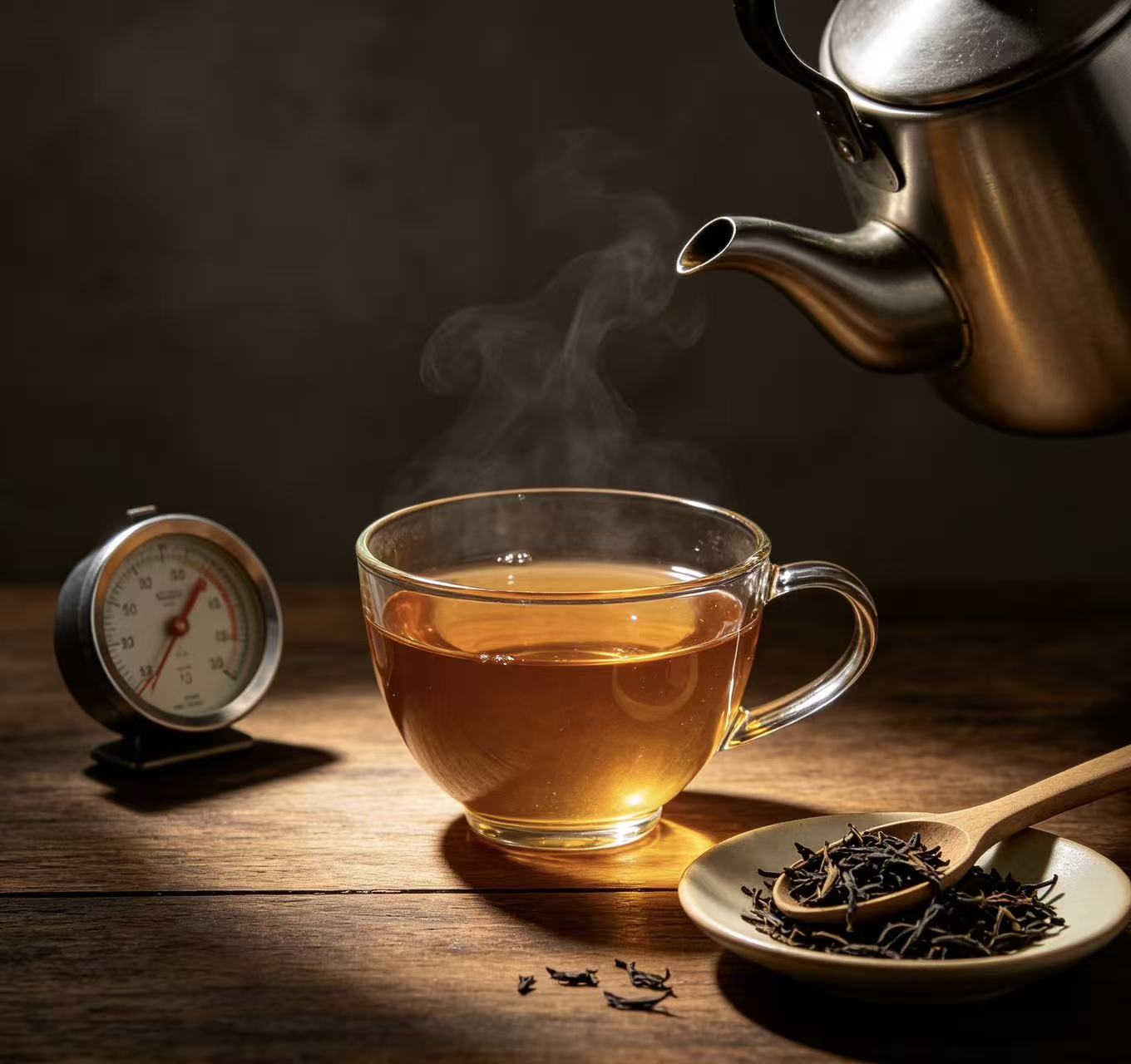
Brew at 85°C (185°F) instead of 95°C (203°F). Lower temperature slows caffeine extraction while preserving core flavor.
Choose lighter oolong styles
Light, green-style oolongs have lower baseline caffeine than heavily roasted dark oolongs.
Use fewer tea leaves
Start with half a teaspoon per cup and adjust to taste, rather than over-steeping to compensate.
Common Mistakes That Boost Caffeine
Avoid these to keep your cup predictable:
Steeping for 5+ minutes by accident
Using boiling water on delicate light oolongs
Drinking premium bud-heavy oolongs late in the day
Frequently Asked Questions
Does oolong tea have more caffeine than green tea?
On average, yes. Because oolong is partially oxidized, it typically releases slightly more caffeine per cup than standard green tea when brewed under the same conditions.
Is oolong tea high in caffeine?
No, it is considered moderately caffeinated. It has less caffeine than black tea and coffee, making it a solid middle-ground option for most people.
Can I drink oolong tea before bed?
For most people, oolong consumed after 3–4 PM can disrupt deep sleep. If you are caffeine-sensitive, avoid oolong entirely in the evening.
Final Thoughts
So, does oolong tea have caffeine? Yes — but at a moderate, adjustable level that makes it one of the most versatile caffeinated drinks for daily use. Whether you want a gentle morning lift or steady afternoon focus, you can tweak steeping time, temperature, and leaf quantity to match your ideal intake.
For more practical tips, explore our complete Brewing Guides to perfect your steep, or browse our oolong tea collection to find the right style for your taste.